
A payments statute looks like a document about software, yet every digital transaction in Uganda still lands somewhere physical. Money that moves as a text message resolves at an agent’s kiosk, travels over a mast, and settles in a data centre. The National Payment Systems Act, enacted on 4 September 2020, governs the invisible layer, but its effects run down into the visible one — the agent networks, connectivity and settlement infrastructure that give digital payments a footprint on the ground. Read through a property and infrastructure lens, the law is quietly about location and asset economics.
The Physical Rail: Where Digital Money Touches Ground
Digital payments depend on a chain of physical assets. An agent needs premises, cash and a reliable connection; a provider needs data-centre capacity and links into the settlement system the central bank now formally supervises. By defining a licensing regime and a supervisory perimeter, the Act raises the standard those assets must meet. A licensed, supervised operator has stronger reasons to invest in reliable premises, resilient connectivity and secure infrastructure than an informal one.
The agent network is the most tangible expression of this. It is a distributed physical estate — thousands of small commercial points — whose value rises when the system behind them is trusted and supervised. Formalising the rail tends to formalise the estate that carries it.
Every digital payment has a doorway, and the law raises the standard of the building it opens into.
The Corridor Logic: Payments Follow Trade Routes
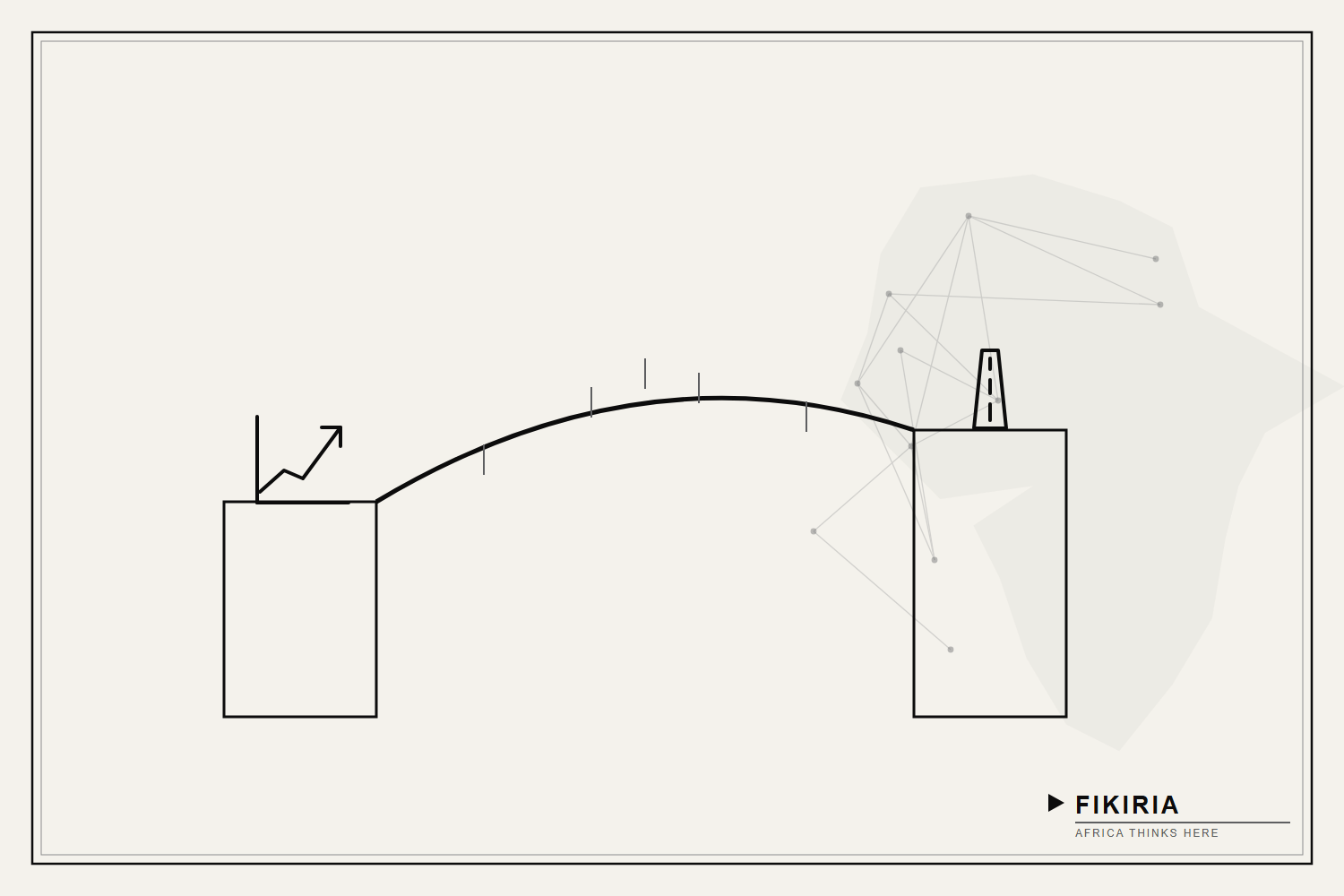
Infrastructure clusters where trade concentrates, and Uganda’s trade concentrates along known corridors — the route inland from Mombasa on the Northern Corridor, the arteries through Kampala, and the border crossings that feed the region. Payment infrastructure follows that logic, because the places that move the most goods also move the most money. A firmer payments framework strengthens the case for building settlement and agent capacity where commercial volume already sits.
That linkage matters for anyone weighing where to place a data centre, an agent hub or a treasury operation. The Act does not site these assets, but by making the payments market more legible it improves the business case for locating them near the flows they serve. A supervised operator planning capacity has a firmer basis for committing to a location, because the regulatory question that once clouded such decisions now has a defined answer. Infrastructure follows certainty as much as it follows volume, and the law supplies a measure of both.
Payments infrastructure is not placed at random; it settles where trade already pools.
The Delivery Constraints: Power, Connectivity and Upkeep
The honest part of any infrastructure story is the constraint. A supervised payments system assumes reliable power, adequate connectivity and someone responsible for maintaining the physical estate. Where those are thin, the perimeter the law defines meets a delivery gap it cannot close by itself. Connectivity coverage, power reliability and the cost of maintaining a dispersed agent network are the practical limits, and the specific figures on this date are [TK].
Ownership and maintenance are the questions that decide durability. A rail is only as good as its upkeep, and licensing raises the expectation that operators maintain their infrastructure rather than let it degrade between transactions.
The perimeter is drawn on paper; whether it holds depends on power lines, masts and maintenance schedules.
So What
For an investor or developer reading the law through an asset lens, the implication is to look past the software to the estate beneath it. The National Payment Systems Act makes the payments market more legible, and legibility tends to reprice the physical points that serve it — agent premises in high-traffic locations, connectivity assets and data-centre capacity near trade corridors. The locations worth watching are the commercial nodes along Uganda’s corridors where formalised payment volume concentrates. The building, in this business, still matters as much as the code that runs inside it.