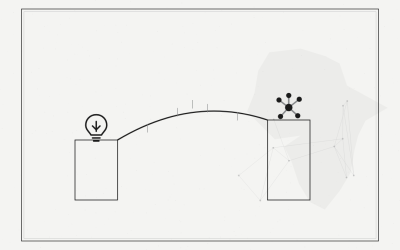

Development economics keeps returning to one unsolved puzzle: how does a low-income economy finance long-lived assets when it has neither deep capital markets nor patient foreign lenders willing to price the risk cheaply? On 26 June 2023 Kenya offered a particular answer that is worth reading as a strategic model, not just a tax. The Finance Act, 2023 introduces an Affordable Housing Levy, a payroll-linked contribution ring-fenced for housing. Stripped of its politics, it is a designed mechanism, and the design carries assumptions that deserve scrutiny.
The Model: Forced payroll saving as capital formation
The underlying logic is old and well understood. Rather than wait for a mortgage market to deepen, the state compels a slice of formal wage income into a ring-fenced pool and directs it at a specific asset class. It is the same family of thinking as national provident and social-security funds: mandatory contribution, pooled capital, state-directed deployment. The novelty is aiming that logic squarely at housing supply through a dedicated finance stream rather than at pensions or health.
As a strategic model it has a clear appeal. It sidesteps shallow capital markets, avoids hard-currency borrowing, and creates a predictable domestic cash flow the government controls. For a continent short of long-term local capital, mobilising it from payroll is a coherent, replicable idea, which is exactly why other African governments are watching it as a test case.
The takeaway: the model is compulsory domestic saving repurposed as construction capital, and its intellectual strength is independence from foreign and market financing.
The Hidden Assumptions: What must be true for it to work
Every transferable model rests on local assumptions that its designers treat as universal. This one assumes a formal payroll base large enough to raise meaningful sums, which holds better in Kenya, with its relatively broad formal sector, than in economies where informal work dominates. It assumes collection and remittance systems that function with low leakage. And it assumes the state can convert cash into completed, correctly priced, occupied homes, a capability that is scarce and unevenly distributed.
It also assumes political and legal durability. A levy introduced through a finance act can be contested, and contestation is not noise, it is a design risk that changes the mechanism’s reliability. A model that works only while unchallenged is a fragile model.
The takeaway: the levy’s portability is bounded by assumptions, a formal wage base, clean collection, delivery capacity and legal durability, that are local, not universal.
The Second-Order Effects: Governance and incentives beneath the mechanism
A ring-fenced fund raises governance questions that outlast any single budget. Who allocates the money, on what criteria, with what transparency and audit, and who is accountable if units are not delivered? Earmarked pools are efficient at raising money and vulnerable at spending it, because the discipline that markets impose on private capital must be replaced by institutional rules. The programme’s public registration channel, BomaYangu, is one visible governance surface, matching contributors to a transparent queue.
The incentive design matters too. If the levy is felt as a pure cost by the formal sector while the informal economy escapes it, the second-order effect is to penalise formalisation, the opposite of what a growing economy needs. A model that discourages firms and workers from entering the formal net undermines its own tax base over time.
The takeaway: the mechanism’s long-run success is a governance and incentives problem as much as a financing one.
So What: The framework an operator should take away
For a strategist or policymaker reading Kenya on 26 June 2023, the transferable lesson is not “introduce a housing levy”, it is the discipline of testing the model’s assumptions before copying it. Ask whether your formal base is deep enough, your collection clean enough, your delivery capacity real, your legal footing durable, and your governance transparent. Where those hold, payroll-mobilised domestic capital is a legitimate route around missing markets. Where they do not, the same design becomes an extractive charge with little to show.
The indicator that validates the framework is the ratio of contributions collected to homes financed and delivered. That single number reveals whether the model is capital formation or merely revenue, and it is the figure every watching government should demand before adopting Kenya’s design as its own.