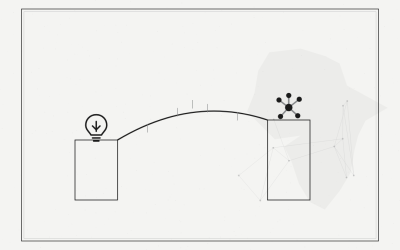

Every East African government now wants a fintech hub, and most will try to copy the country that keeps being held up as the template. Rwanda’s FinTech Centre and Innovate Rwanda platform, launched on 12 March, are the latest expression of a strategic model the region has learned to admire: the state as coordinator, assembling innovators, financiers, researchers and regulators into a single managed structure. The question for anyone tempted to replicate it is which parts are the model and which are simply Rwanda.
The Model: Coordination as Industrial Policy
Stripped to its logic, the model treats an ecosystem as something that can be deliberately convened rather than left to emerge. Instead of subsidising firms or picking winners, the state lowers coordination costs — a national directory, incubation, a single door to regulatory navigation — on the theory that fintech formation is bottlenecked on friction, not on talent or demand.
This is industrial policy in a light-touch register, and its appeal is that it is cheap relative to direct funding and politically legible. Its weakness is the same: coordination without capital or demand produces a well-organised portal and little else. The model’s strength is real, but it is a strength only where friction was genuinely the binding constraint.
Takeaway: the model is coordination-as-policy — powerful where friction is the bottleneck, hollow where capital or demand is.
The Local Assumptions: What Does Not Travel
Rwanda’s version rests on assumptions that are local rather than universal. It assumes a state with the administrative credibility to convene and be trusted by both founders and investors; a compact geography where a single centre can plausibly reach the whole market; and a regulator willing to engage rather than merely enforce. Strip any of those away and the same structure behaves differently.
A larger, more fragmented neighbour cannot assume one centre reaches everyone. A state with weaker institutional trust cannot assume investors treat its convening as a signal of quality. The model is transferable in form; its results are not, because the results were carried by the assumptions, not the org chart.
Takeaway: what travels is the template; what does not travel is the institutional trust that made it work — copy the second, not just the first.
The IP, Data and Governance Questions
Second-order questions follow the moment a state builds a national innovation platform. A directory of innovators is a dataset; who owns it, who can query it, and how founders’ information is protected become governance questions, not administrative details. Rwanda has positioned itself as a data-governance-conscious jurisdiction — one reason the ICT and innovation ministry can present the model credibly — and part of what a copyist would need to reproduce.
There is also an IP dimension. A state-convened pipeline sits close to the intellectual property of the firms it incubates, and the terms on which ideas, code and equity move through incubation shape whether founders trust the platform. These are answerable questions, but the launch does not yet answer them [TK].
Takeaway: a national innovation platform is a data and IP regime in disguise — the governance terms decide whether founders opt in.
What It Means for the Operator
For an operator or policymaker across East Africa, the decision implication is to separate the model from the myth. Rwanda offers a genuinely useful template: coordinate the ecosystem, lower friction, route founders through the regulator rather than around it. But the returns came from institutional trust, compact scale and a credible data regime — conditions that must be built, not assumed. The right lesson is not to clone the centre. It is to ask which local constraint is actually binding, and to build the coordinating structure only where friction, and not something harder, is the thing in the way.