
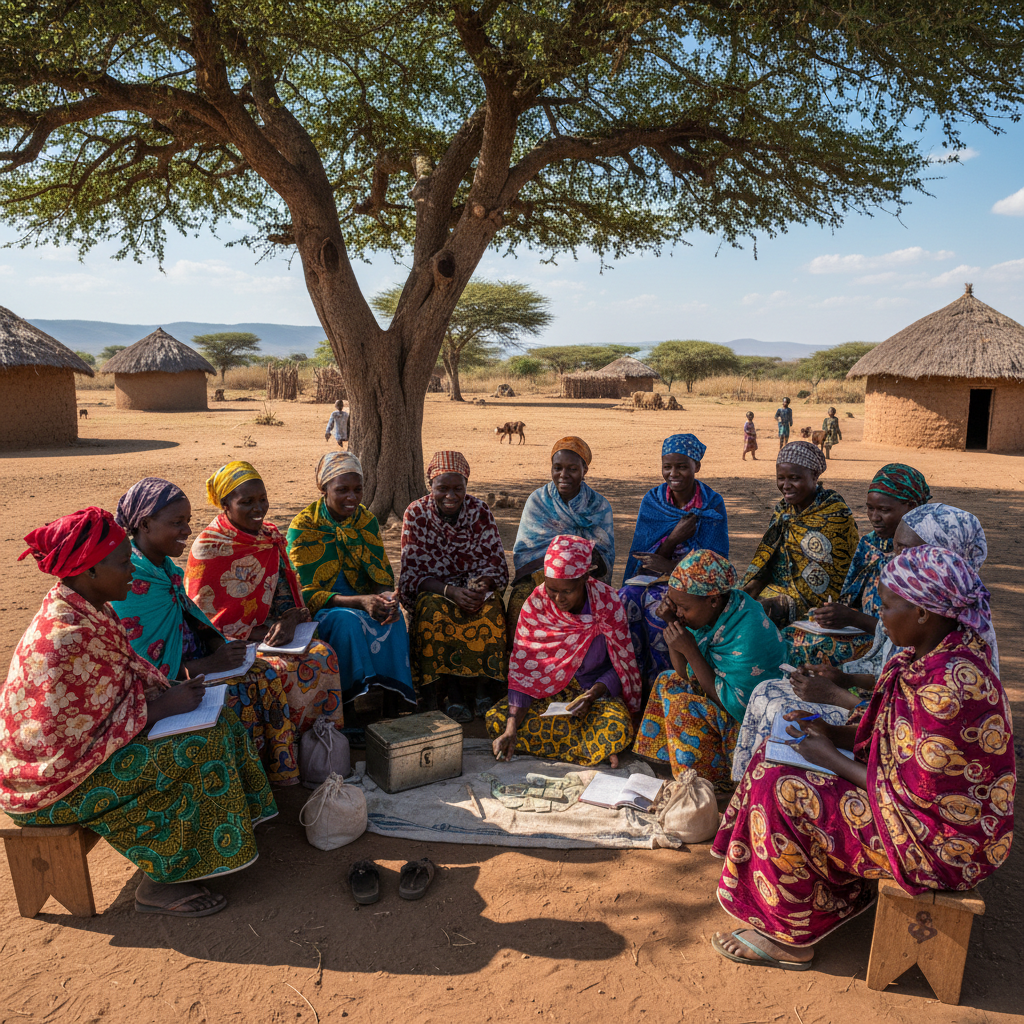
In rural East Africa, where access to formal banking systems is limited, savings groups have emerged as a lifeline for financial inclusion. These community-driven initiatives enable individuals to save money, access loans, and invest in income-generating activities, fostering economic empowerment and social cohesion. By pooling resources and building trust among members, savings groups are transforming lives and driving sustainable development in rural communities. This article explores how these groups operate, their impact, and the opportunities they create.
The Structure and Operation of Savings Groups
Savings groups are typically composed of 10 to 30 members who meet regularly to save money and lend funds to one another. Members contribute a fixed amount during each meeting, which is deposited into a collective fund. Loans are disbursed from this pool, with terms and interest rates agreed upon by the group. At the end of a savings cycle, which usually lasts 6 to 12 months, the accumulated savings and interest are distributed among members based on their contributions.
Village Savings and Loan Associations (VSLAs) are a popular model in East Africa, providing a structured framework for managing these groups. Unlike traditional banking systems, savings groups require no collateral, making them accessible to the most vulnerable members of society, including women and smallholder farmers.
Economic Empowerment Through Savings Groups
Savings groups are a powerful tool for fostering economic empowerment in rural areas. They provide members with access to affordable credit, enabling them to invest in education, healthcare, and small businesses. For instance, a women’s savings group in Uganda used their pooled funds to establish a poultry farming venture, which now generates consistent income for its members.
Additionally, savings groups promote a culture of financial literacy and discipline, teaching members to manage money effectively and plan for the future. These skills are crucial for breaking cycles of poverty and building resilience in underserved communities.
Social and Community Benefits
Beyond financial support, savings groups strengthen social bonds and create a sense of solidarity among members. The regular meetings serve as platforms for mutual support, knowledge sharing, and collective problem-solving. For example, a savings group in Kenya initiated a community clean-up project, demonstrating how these groups can inspire broader community involvement and development.
Savings groups also empower women by giving them a platform to participate in decision-making and leadership. This inclusion fosters gender equity and enhances the role of women in rural economies.
Challenges and Solutions
Despite their benefits, savings groups face challenges such as limited financial literacy, group mismanagement, and insufficient external support. Training programs focused on record-keeping, conflict resolution, and financial management can address these issues and ensure the sustainability of these groups.
Partnerships with NGOs and microfinance institutions can further enhance the capacity of savings groups by providing resources, technical assistance, and access to larger funding pools.
Conclusion
Savings groups are a transformative force in rural East Africa, empowering individuals and communities to achieve financial independence and collective prosperity. By fostering economic growth, social cohesion, and gender equity, these groups are creating a foundation for sustainable development. Expanding support for savings groups through education, training, and partnerships will amplify their impact, unlocking new opportunities for rural communities across the region.
CARE International – VSLAs in Africa
https://www.care.org/vsla-africa
World Vision – Economic Empowerment Programs
https://www.worldvision.org/vsla-economic-empowerment
The Guardian – Savings Groups in Africa
https://www.theguardian.com/savings-groups-africa
 WhatsApp for a Google-Ready Website


