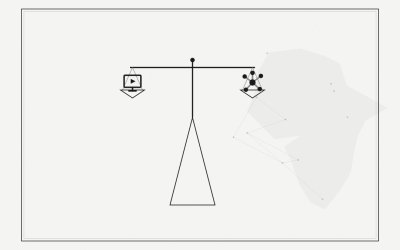

The companies most associated with disrupting markets must now ask permission to enter Kenya’s. Amazon’s Kuiper satellite venture and the ride-hailing group Uber, two firms whose brands rest on moving faster than regulators, have both filed formal applications to operate under Kenyan licences, and the Communications Authority of Kenya has opened the door to public objection before deciding. Amazon Kuiper Kenya has applied for a telecommunications licence and Uber Kenya for a courier licence, with the Authority inviting members of the public to file objections within 30 days.
The applications, routine in form, carry a larger signal about how Kenya intends to govern the next wave of platform expansion.
The Gatekeeper: Why the Licence Comes First
The Communications Authority is the gate through which any operator of telecommunications or courier services in Kenya must pass. By requiring Amazon Kuiper and Uber to apply and submit to a public-objection window, the regulator is asserting a straightforward principle: scale and global brand recognition do not exempt a firm from the local rulebook.
That principle has teeth in Kenya, a market where the Authority has long licensed and supervised mobile operators, internet providers and courier firms. The 30-day objection period invites incumbents, consumer groups and competitors to be heard before approval, building the eventual licence on a record rather than a rubber stamp.
The takeaway: in Kenya’s communications market, the licence, not the launch, is the moment that counts.
The Sky and the Street: Two Different Bets
The two applications point at two different frontiers. Amazon Kuiper’s interest is in low-earth-orbit satellite broadband, a technology that promises to reach the parts of Kenya that terrestrial fibre and mobile masts have struggled to serve economically, from the arid north to remote stretches beyond Nairobi, Mombasa and Eldoret. A telecommunications licence is the legal precondition for beaming that service into Kenyan airspace, and it places Kuiper alongside the incumbents who have spent years and capital building the country’s terrestrial networks.
Uber’s courier application is an earthbound bet on the same logistics network it already runs for rides, formalising parcel and delivery services under a defined licence category and bringing an informal-seeming activity inside a regulated frame. One reaches for the sky; the other consolidates the street. Both, notably, are choosing to enter through the front door of the regulator rather than around it.
The takeaway: satellite broadband and last-mile delivery are different markets, but both now run through the same Nairobi licensing desk.
The Stakes: Connectivity, Competition and Sovereignty
For Kenyan consumers and operators, the stakes are real on three fronts. Connectivity could improve if satellite broadband reaches the underserved, narrowing a digital divide that constrains rural enterprise and education. Competition will shift as global platforms enter categories long held by domestic firms, a prospect that explains why the objection window exists. And there is a quieter question of regulatory sovereignty: whether a mid-sized African market can set and enforce terms on the world’s largest platforms.
Kenya’s approach, invite the applications, open them to objection, then decide, is a model of measured engagement rather than either blanket welcome or reflexive resistance. It keeps the regulator in control of the timetable and gives domestic operators a formal moment to be heard before a global entrant is waved through. The Authority’s notice and the surrounding gazette record set out the process in the Kenya Gazette notices for early June.
The outcome will tell East Africa something useful about how to host Big Tech on local terms. For operators watching from Dar es Salaam to Kampala, Nairobi’s handling of these two applications is a template in the making, a worked example of regulation keeping pace with platforms rather than chasing them. The decision is not whether the platforms come, but on whose terms they stay.