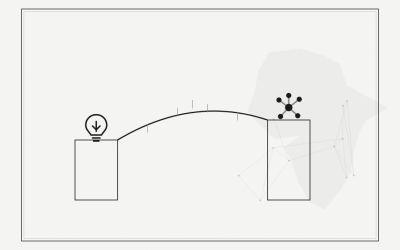
Every industrial policy is a theory about cause and effect, and Kenya has just committed to one that looks internally contradictory: raise the compliance burden in construction while lowering it in manufacturing. Read as a strategic model rather than two separate announcements, the pairing reveals a coherent logic, and a set of assumptions that could hold in Nairobi yet fail the moment the model is copied into another market.
The Model: Asymmetric Friction by Design
The underlying framework is the deliberate application of friction where it adds value and its removal where it destroys value. In construction, friction, in the form of enforced National Building Code standards, buys quality, safety and durable assets, so the state raises it. In manufacturing, friction, in the form of multiple licensing requirements, buys nothing productive, so the state signals its removal. This is not inconsistency; it is asymmetric friction, calibrated to the outcome each sector needs.
The elegance of the model is that it treats regulation as a tool with a sign, positive where it protects value, negative where it taxes output, rather than as a uniform good or evil. The National Building Code enforcement and the licensing reset are two applications of one rule.
Takeaway: the strategic model is asymmetric friction, and its coherence lies in matching the regulatory sign to the value at stake.
The Binding Assumption: State Capacity to Discriminate
The model rests on a demanding assumption: that the state can tell productive friction from wasteful friction, and enforce the distinction cleanly. Raising standards requires inspectors, testing and certification that actually function; removing licences requires the discipline not to quietly reintroduce them elsewhere. Where administrative capacity is strong, the model sharpens the economy. Where it is weak, stricter codes become selective harassment and simplified licensing becomes informal re-permitting.
This is the assumption most likely to be local rather than universal. Kenya’s institutional depth in Nairobi is not evenly distributed, and it is far from guaranteed in a neighbouring market that might borrow the template without the capacity behind it.
Takeaway: the model works only where the state can reliably discriminate good friction from bad, and that capacity does not travel automatically.
The Skills Assumption: Human Capital as the Hidden Variable
The second load-bearing assumption is that the workforce can meet the new equilibrium. Higher construction standards demand certified artisans and inspectors; lighter manufacturing demands operators who can run scaled lines. The elevation of TVET-to-industry alignment as a priority is the model acknowledging its own dependency: without practical skills, asymmetric friction produces standards no one can meet and factories no one can staff.
Copied elsewhere, this assumption often fails first. A market can import the regulatory design overnight but cannot import a trained workforce, which takes years to build. The skills pipeline is the constraint that decides whether the model is transferable.
Takeaway: human capital is the hidden variable, and it is the assumption most likely to break when the model is exported.
The Second-Order Effect: A Reordered Competitive Map
Strategically, the reset changes who competes and how. Stricter compliance plus simpler licensing alters how regional contractors and manufacturers enter Kenya, favouring firms that already operate to high standards and can move fast under lighter rules. The second-order effect is a reordered competitive map, one that rewards documented capability and punishes reliance on informal margins, across the EAC and under AfCFTA.
The governance question that follows is who owns the standards, the certification data and the skills frameworks that now gate the market. Whoever controls those becomes an infrastructure layer others must build on.
Takeaway: the model reorders competition around proven capability, and control of standards and skills data becomes a strategic asset.
So what is the decision implication for an operator weighing this model, at home or abroad? Do not copy the policy; copy the logic, and test its assumptions against the local ground. The measurable indicators to track are whether enforcement stays consistent rather than selective, whether retired licences stay retired, and whether skills supply keeps pace with the new standards. The firm that understands the reset as asymmetric friction, and positions where proven capability is rewarded, reads the model correctly. The one that mistakes it for mere deregulation, or mere crackdown, misreads both halves.