
Data is often called weightless, yet it lives in very physical places. Servers, data centres, cabling, cooling and power sit on real land in Mombasa and Nairobi, and the rules that govern data can move where those assets must be built. On 8 November 2019 Kenya enacted the Data Protection Act, and while it reads as a privacy statute, it carries consequences for infrastructure, land and the corridors along which the country’s digital economy is physically laid.
The tension is between the intangible subject and the tangible footprint. A law about consent and rights can, through provisions on how and where data is handled, reshape demand for the most concrete assets there are: buildings, land and connectivity.
The Physical Layer: Where Governed Data Lives
A privacy regime raises the standard for how personal data is secured and handled, and that standard has a physical expression. Firms subject to the Act — banks, telecoms, health providers, platforms — must think harder about where customer data is stored and under what controls. That focus tends to lift demand for professionally run, secure facilities over improvised server rooms.
The duties driving this sit in the Data Protection Act. Where data must be handled to a defined standard, the buildings and connectivity that meet that standard gain value.
The takeaway: raising the bar on data handling quietly raises demand for the physical estate that can meet it.
The Corridor Map: Landing Points and Power
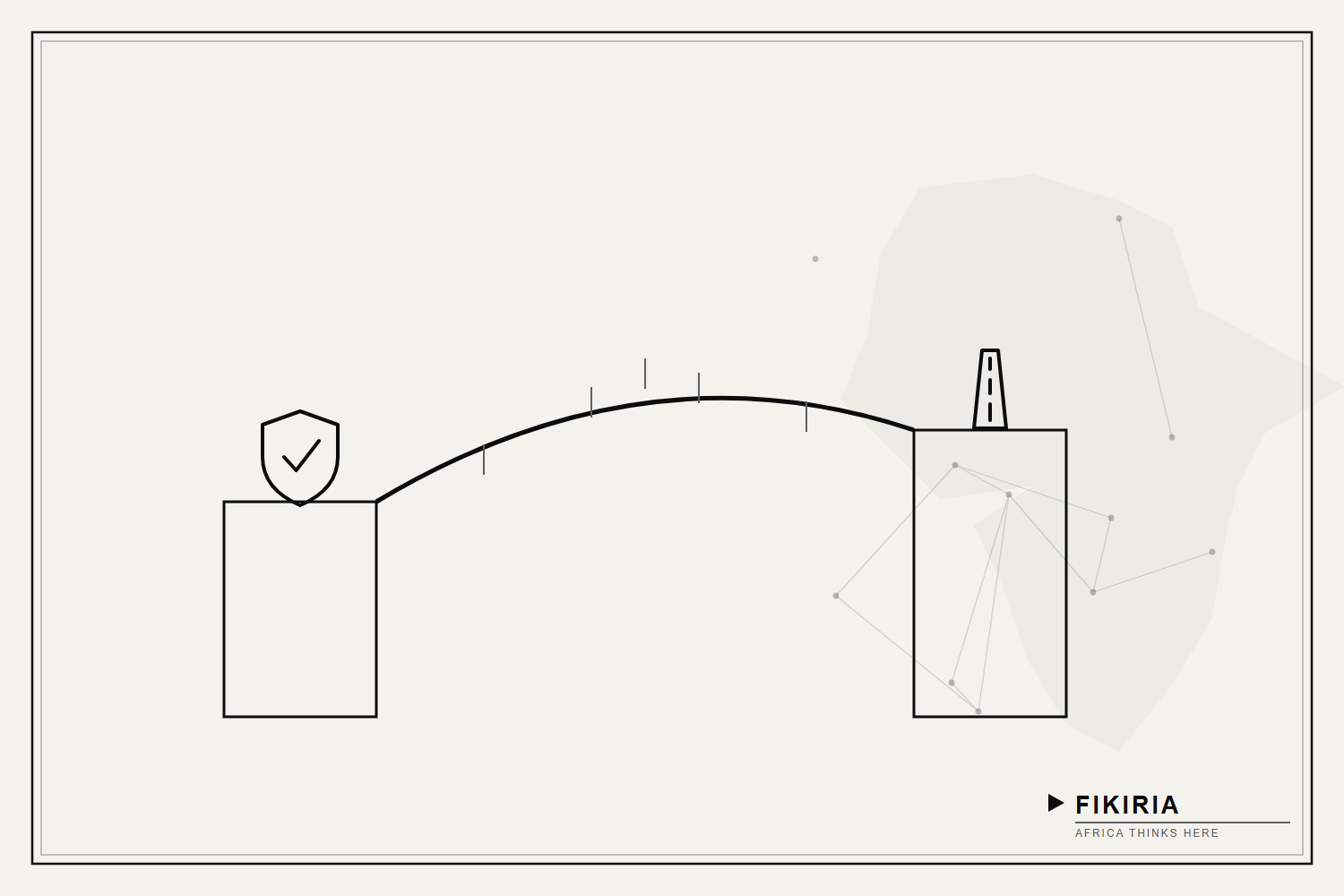
Kenya’s digital infrastructure has a geography. Mombasa is where undersea cables land; Nairobi is where the demand and the enterprise sit; and the corridor between them carries the fibre and traffic that link the two. A stronger data-governance regime strengthens the case for handling regional data within well-served Kenyan locations rather than routing it to less-regulated alternatives.
For the property and engineering economy, the relevant assets are the landing stations, the fibre routes and the power supply that any serious facility depends on. Reliable land, permits and electricity are the constraints that decide whether such capacity can actually be delivered where it is wanted.
The takeaway: data rules interact with corridor geography, and the locations with cable, power and permits are the ones that can capture the demand.
The Delivery Constraints: Land, Permits, Power
Infrastructure lives or dies on unglamorous questions. Securing suitable land, obtaining permits, guaranteeing power and providing the engineering capacity to build and maintain to standard — these determine whether the demand a law helps create can be met. A privacy regime can raise appetite for secure facilities, but it cannot conjure the land, grid connection or skilled engineering that delivery requires.
That gap is itself an opportunity. Firms that can assemble sites, manage permitting and deliver reliable, maintainable facilities stand to benefit as governed data drives demand for professional space.
The takeaway: the binding constraints are land, permits and power, and whoever solves them owns the asset the new rules make valuable.
The Decision: Read the Law as a Location Signal
For a developer, engineer or infrastructure investor, the Act is worth reading as a demand signal for the physical layer of the data economy. It points toward greater need for secure, well-located, professionally maintained facilities served by cable and power along Kenya’s established corridors.
What 8 November 2019 sets in motion is not visible on any construction site yet. But the logic runs from statute to server to land: govern the data more tightly, and the tangible assets that can hold it to standard become more valuable. The operator who maps that chain early — from the law down to the plot, the permit and the power line — is the one positioned to build where the demand will land.